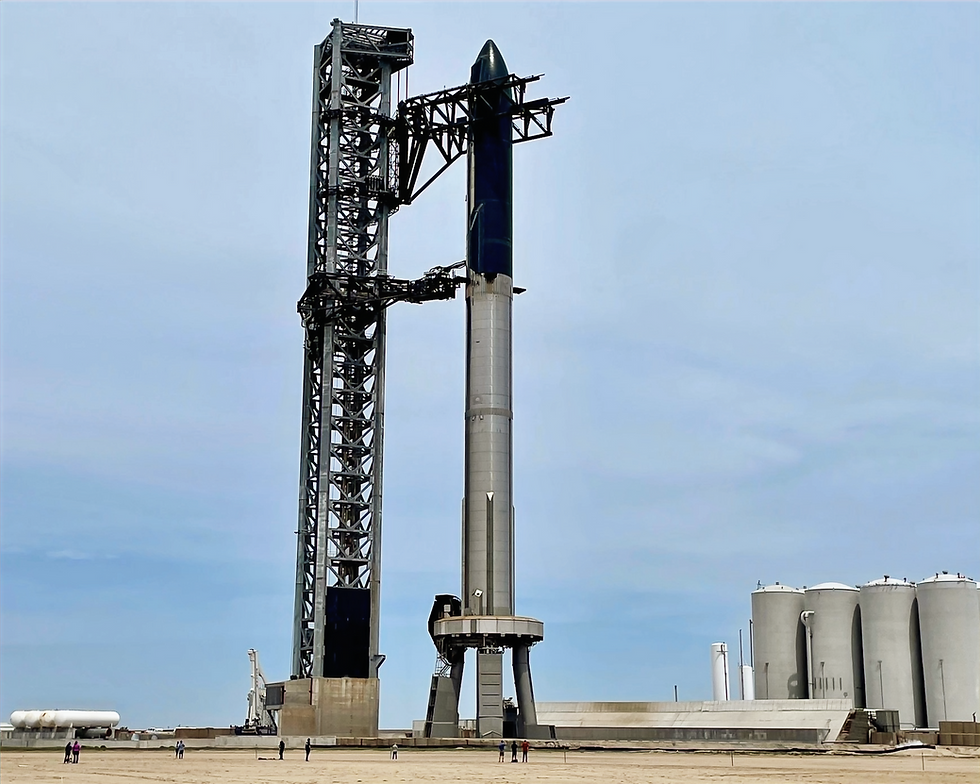
Starship IFT-2: Full speed ahead

7:02 AM Central Time, November 18th, Starship Integrated Test Flight 2 (IFT-2) lifted off from Pad 1, Starbase, Texas. Starship's IFT-2 booster engines ignited at T-3 seconds and the largest most powerful rocket in the world lifted off the pad at T+0. A stark contrast to Starship Integrated Flight Test 1 (IFT-1) when Starship sat on the orbital launch mount a harrowing 8 seconds before liftoff.
This time was noticeably different, sudden, deliberate.

IFT-2, Booster 9 and Ship 25, lifted off from Starbase, Texas, just 212 days from Starship's inaugural test flight IFT-1 on April 20th, 2023.
Compared to the launch cadence of Falcon 9, this may appear to be a long delay from IFT-1 to IFT-2. However, for the largest most powerful rocket ever launched, 212 days is an amazing feat particularly considering the substantial damage IFT-1 caused at the pad. But even more impressive was the speed at which SpaceX moved to repair and upgrade the pad for IFT-2. This was a significant message for the industry and the world, a new sense of urgency in space exploration. SpaceX's primary IFT-1 objective to clear the tower was achieved. Now it was time for something more.
The primary strategic goals for this flight included successful hot staging, booster boost back, the ship reaching a near orbital trajectory, and minimal damage to the pad. The first goal, hot staging, involves igniting Ship 25's engines before separating from Booster 9 while its engines are still active. This technique was initially used in the Soviet Union's space program with the R-7 family, including Soyuz, Vostok, and Voskod. SpaceX is currently the only U.S. commercial space company utilizing hot staging. This method is a significant upgrade aimed at enhancing payload capacity for future missions.

Initial post launch review appears to confirm progress across the four key objectives. Hot staging - check. Booster 9 boost back - check. Ship 25 near orbital trajectory - check. Minimal pad damage - check.
The story here isn't on hot staging or whether Starship reached orbit, but rather on the rapid implementation of crucial new features and capabilities by the ship and booster teams, such as transitioning from hydraulic to electronic engine thrust vector control. It's also about the skilled trades that rebuilt and transformed a destroyed Pad 1, along with a damaged tower and ground support system infrastructure, to meet the IFT-2 mission objectives on the path to becoming a multi-planetary species.
If a test vehicle program that suffered significant damage can be turned around and achieve its primary objectives in 212 days, what could a fully operational program accomplish?
Next.